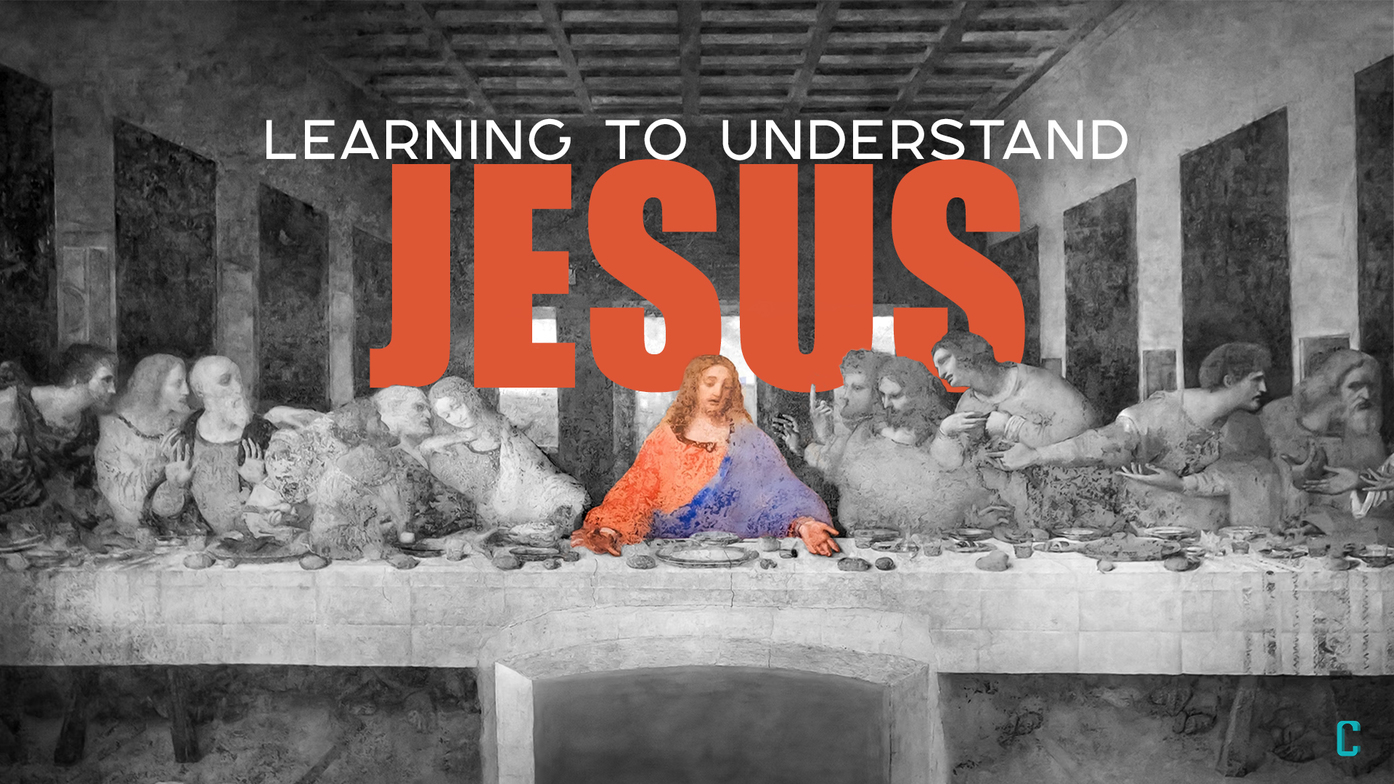
Forgiving sins, calming storms, accepting worship—Jesus didn’t just point to God; he did what only God does. Like a diamond’s facets reflecting light from every angle, Christ’s actions across Scripture collectively declare his divinity. No single miracle proves it, but together they form an unshakable case. Faith rests not on one moment, but the cumulative weight of a life only God could live. [55:29]
“Who can forgive sins but God alone?” Immediately Jesus knew in his spirit that this was what they were thinking in their hearts, and he said to them, “Why are you thinking these things?” (Mark 2:7-8, NIV)
Reflection: Which facet of Jesus’ divine authority (forgiveness, power over nature, etc.) most anchors your faith today?
Bible Study Guide
Bible ReadingJohn 20:24-29 (ESV)24 Now Thomas, one of the Twelve, called the Twin, was not with them when Jesus came. 25 So the other disciples told him, “We have seen the Lord.” But he said to them, “Unless I see in his hands the mark of the nails, and place my finger into the mark of the nails, and place my hand into his side, I will never believe.” 26 Eight days later, his disciples were inside again, and Thomas was with them. Although the doors were locked, Jesus came and stood among them and said, “Peace be with you.” 27 Then he said to Thomas, “Put your finger here, and see my hands; and put out your hand, and place it in my side. Do not disbelieve, but believe.” 28 Thomas answered him, “My Lord and my God!” 29 Jesus said to him, “Have you believed because you have seen me? Blessed are those who have not seen and yet have believed.”Observation questions
- What specific conditions did Thomas set for believing Jesus had risen (John 20:25)?
- How did Jesus address Thomas’ doubt when He appeared to him (John 20:26-27)?
- In the sermon, what two types of evidence were compared to explain how faith grows (direct vs. circumstantial)? [52:54]
- What actions of Jesus in the Bible were highlighted as proof of His deity (e.g., forgiving sins, calming storms)? [43:53]
Interpretation questions
- Why do you think Jesus chose to show His wounds to Thomas instead of simply rebuking his doubt?
- Thomas’ confession, “My Lord and my God,” is a radical statement. What does this reveal about how encountering Jesus changes our understanding of His identity?
- How does the idea of “circumstantial evidence” (like Jesus’ miracles and authority) build a stronger case for faith than relying solely on direct experiences? [54:09]
- The sermon said, “Jesus’ peace precedes transformation.” Why might peace be necessary before belief or obedience can fully take root? [51:20]
Application questions
- Thomas doubted because he trusted death’s finality. Are there areas in your life where you’ve accepted a “finality” (e.g., failure, loss, fear) instead of trusting God’s power to bring life? How can you shift that focus? [49:37]
- Jesus met Thomas’ doubt with grace, not shame. How can you extend that same grace to someone in your life who is wrestling with doubts or questions about faith?
- The sermon emphasized that Jesus’ actions (forgiving sins, calming storms, etc.) reveal His deity more than titles. Which of Jesus’ actions or promises do you need to meditate on this week to strengthen your trust in Him?
- Thomas’ story ends with worship: “My Lord and my God.” What practical step can you take this week to turn a area of anxiety or doubt into an act of surrender and worship? [01:08:30]
- The sermon mentioned Thomas later carrying the gospel eastward. Who in your life needs to hear about the “accumulated evidence” of Jesus’ power and love? How can you share it with them? [01:12:50]